


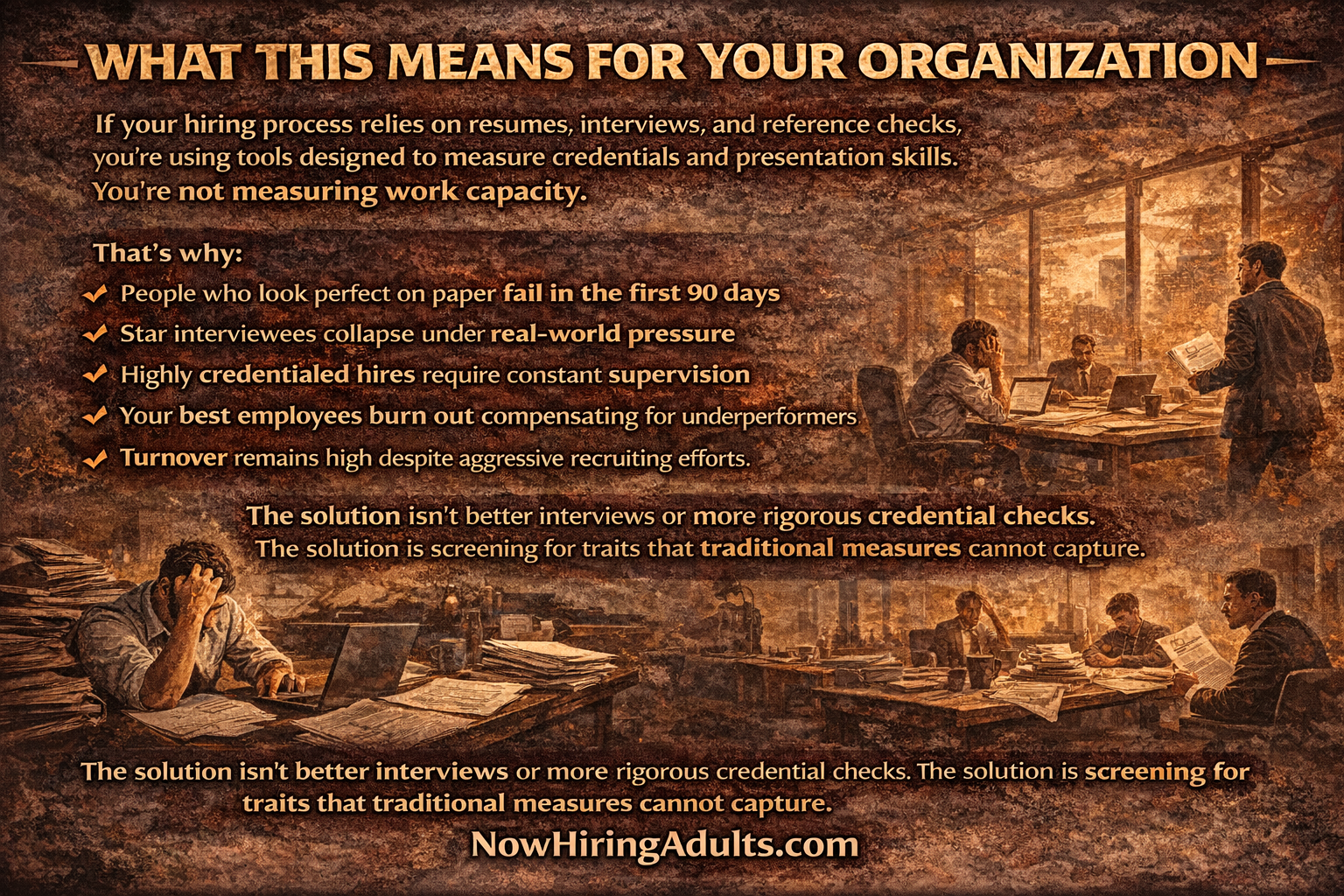
Resumes tell you what someone knows. Interviews tell you how they present. References tell you what worked in the past. None of this tells you who they actually are when the pressure is on, the task is unclear, or things don't go their way.
This is why 80-90% of hiring failures aren't about skills, experience, or credentials. They're about psychological maturity—the unmeasurable traits that determine whether someone can actually do the work.
Traditional measures fail because they screen for the wrong things. They evaluate:
• Education (compliance with institutional requirements)
• Experience (years logged, not capacity demonstrated)
• Interview performance (presentation skills, not work capacity)
• Technical skills (knowledge that can be trained)
These credentials predict nothing about follow-through, frustration tolerance, ownership, or the ability to sustain effort without supervision.
That's the gap. And that gap is destroying organizational performance at scale.
How the Assessment Works
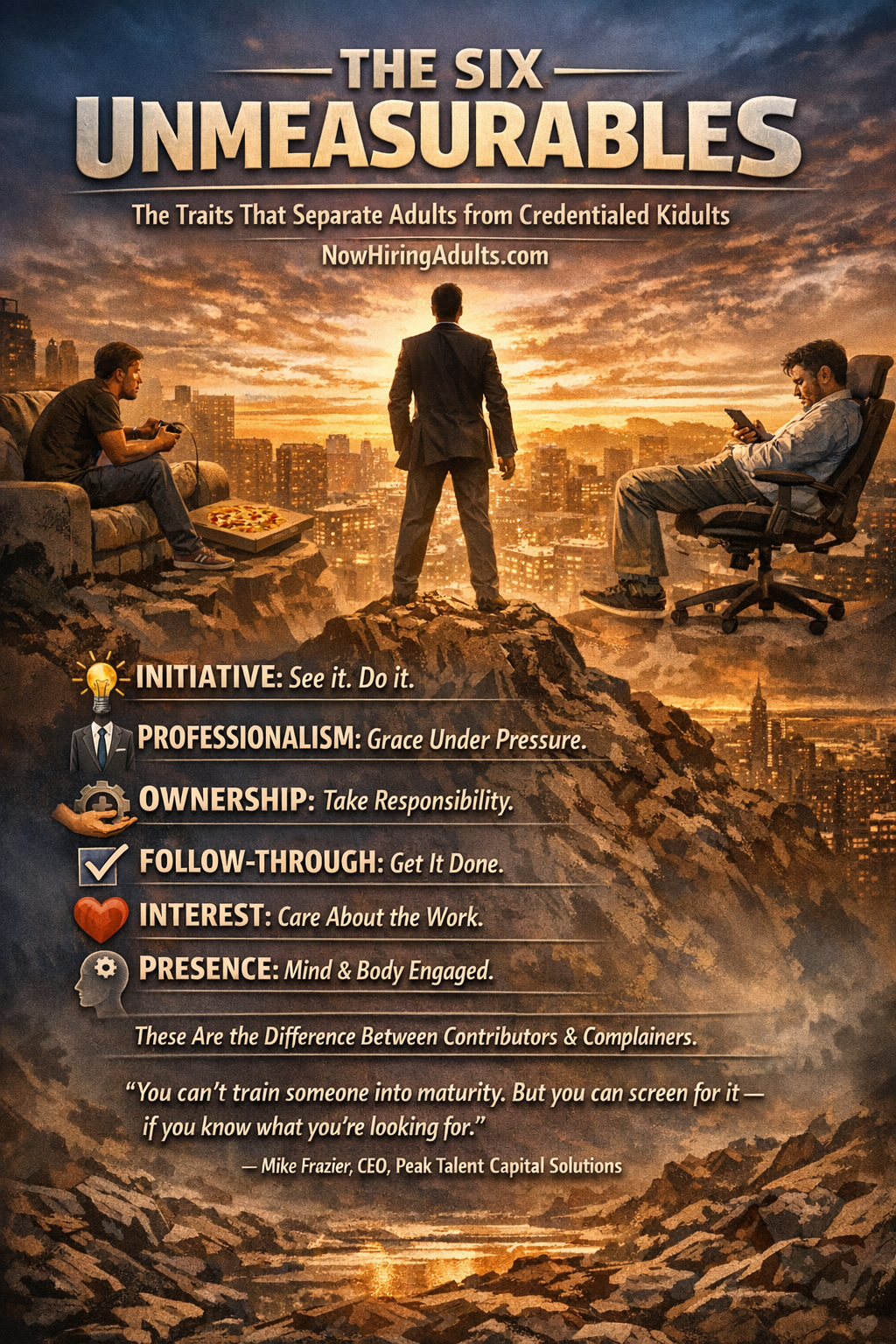
Peak TCS's behavioral assessment is a 48-question instrument that takes candidates 12-15 minutes to complete. It doesn't measure skills, experience, or knowledge. It measures psychological maturity across the Six Unmeasurables:
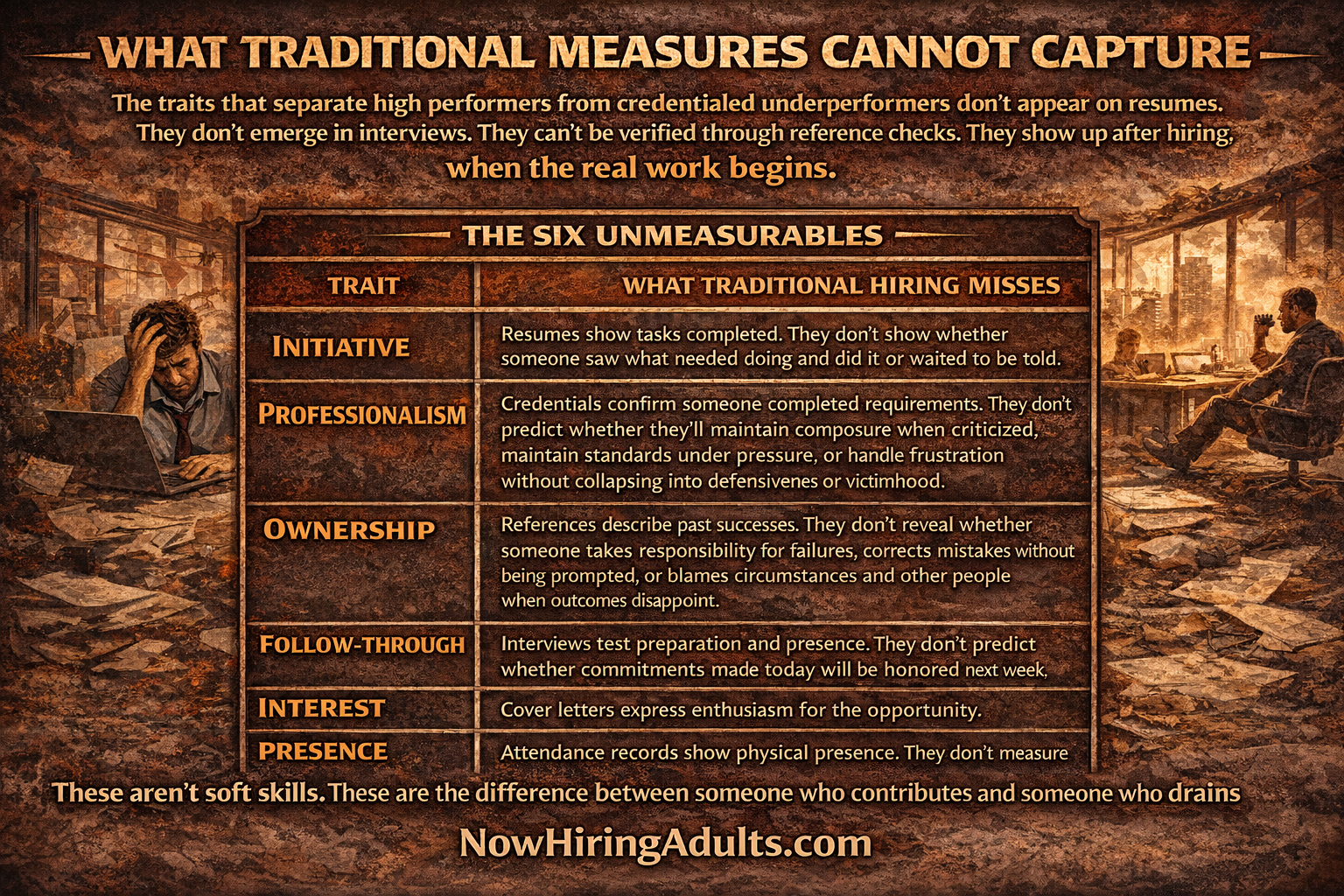
Initiative: Do they see what needs doing and do it, or wait to be told?
Professionalism: Can they maintain composure and standards under pressure?
Ownership: Do they take responsibility for outcomes, or deflect blame?
Follow-Through: When they commit to something, does it get done?
Interest: Are they genuinely engaged in the work, or just collecting a paycheck?
Presence: Do they show up mentally and emotionally, not just physically?
The assessment identifies candidates who possess these traits before hiring, eliminating the catastrophically expensive discovery process that happens after hiring when traditional methods fail.
It's not a personality test. It's not a culture fit survey. It's a work capacity screen that predicts whether someone can actually do the job.
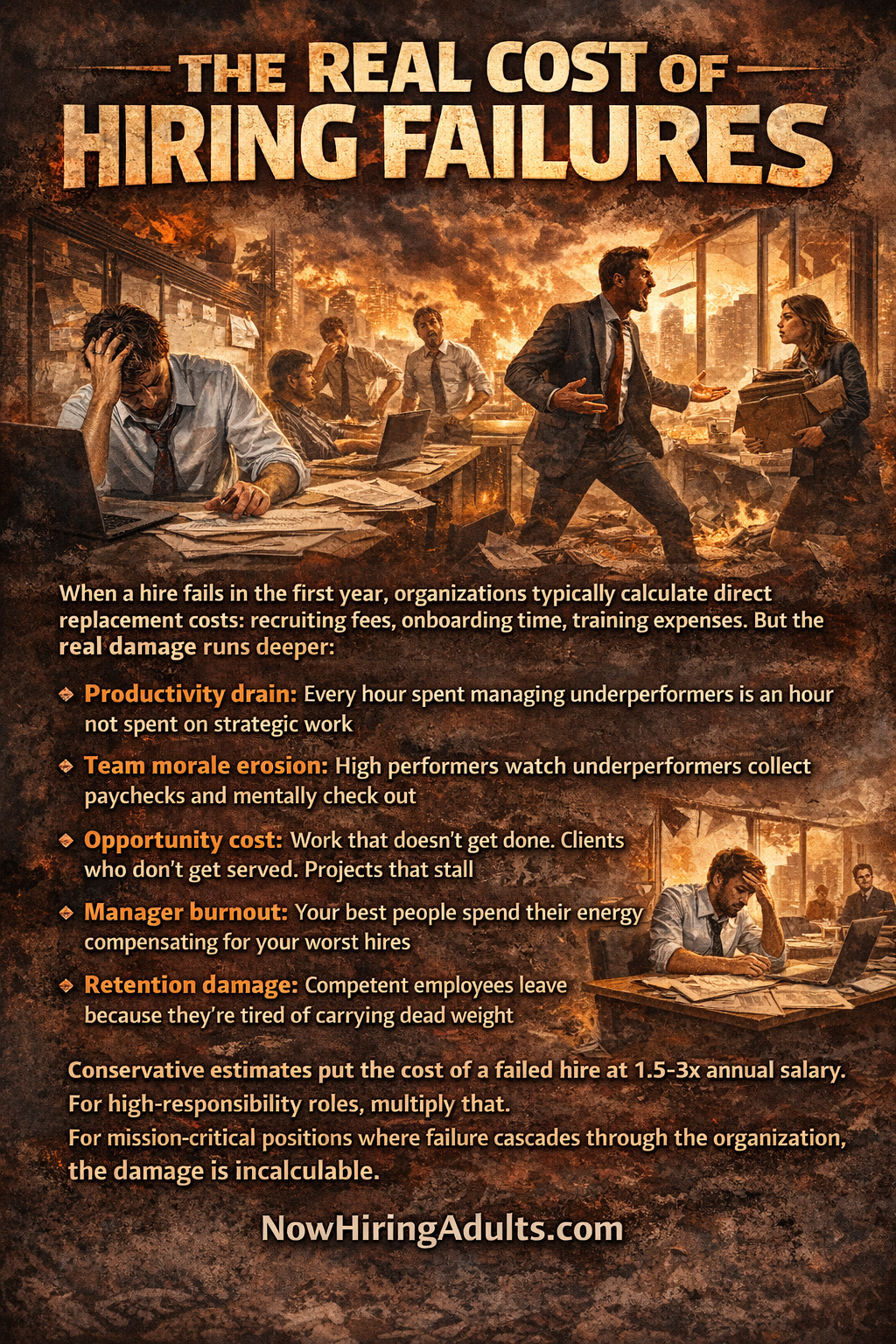
The Bottom Line
Traditional hiring measures tell you what someone has done, what they know, and how they present. They don't tell you who they are when the work gets hard.
The Six Unmeasurables—initiative, professionalism, ownership, follow-through, interest, and presence—are the traits that separate high performers from credentialed underperformers. They can't be trained. They can't be developed through onboarding. They must exist before hiring.
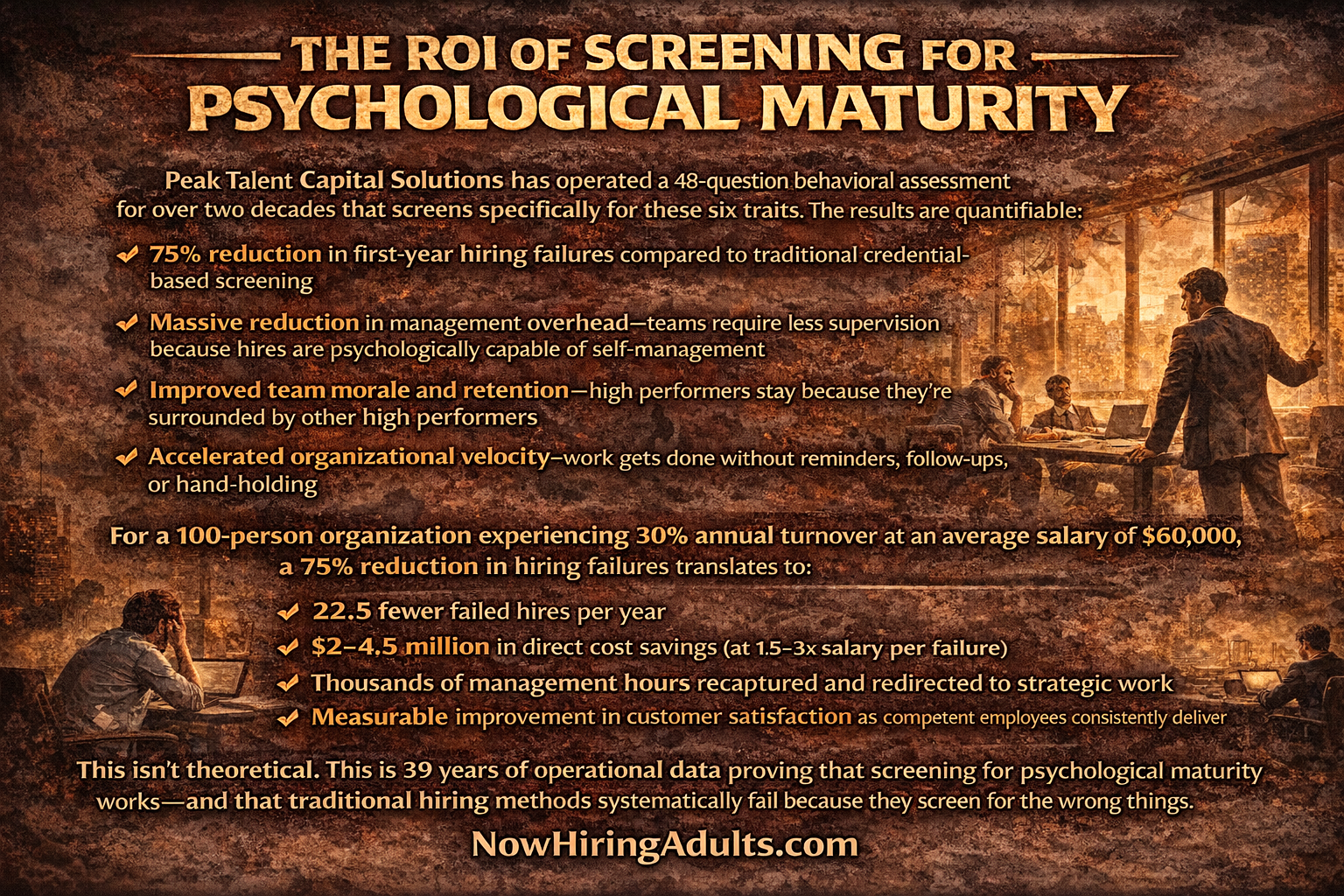
Organizations that screen for psychological maturity experience 75% fewer hiring failures, massive reductions in management overhead, improved team morale, higher retention of top performers, and accelerated organizational velocity.
The ROI is measurable. The methodology is proven. The question is whether your organization will continue using hiring methods that systematically fail—or whether you'll start screening for what actually matters.